
The fold is finished only when the chair opens correctly again
A dealer demonstration often makes folding look like a single action: release, close, lift. The important part comes a minute later. Does the frame open squarely? Are the cables where they belong? Has every latch reached the position that tells the dealer the chair is ready?
That is the purpose of an aluminum electric wheelchair folding mechanism inspection. It does not judge one hinge in isolation. It follows the whole moving system from the open chair, through the fold, into storage position and back to a stable driving setup.
Baichen’s aluminum electric wheelchair category includes more than one design. A bulk-order inspection therefore begins with the exact model, revision and approved sample. A video from a related chair may explain an idea; it cannot define acceptance for another mechanism.
Put the approved sample beside the production chair
Before anything moves, record the model, frame configuration, folding direction, latch design, battery arrangement and parts that must be removed or repositioned. Photograph the chair open, midway and fully folded. Include the hand positions shown in the current instruction.
This page prevents an easy mistake. A buyer may approve one sample, then receive a production chair with a small but important difference near the latch, cable clip or controller mount. Without a named reference, the team ends up comparing memory against a moving frame.
The aluminum electric wheelchair folding mechanism inspection should also note what stays attached during transport. A footrest, cushion, battery or joystick that is removed for packing needs a clear place in both the product record and the carton plan.

Look at the chair before the first fold
Place the open chair on a level floor. Compare the left and right wheels, casters, seat supports, armrests and footrests. Look near hinges, cross members and latch mounts for coating damage, loose hardware, sharp edges, unexpected contact or a cable already under tension.
Appearance has limits. It cannot prove the alloy grade, heat treatment or structural strength. Those questions belong to controlled documents and model-level evidence. The visual check has a more practical job: find anything that makes the coming fold unsafe, unclear or unrepresentative.
Take one photograph from the front and another from behind. When both sides share a frame, small alignment differences become easier to see. If the chair is already sitting unevenly, folding it will not explain why.
Move slowly enough to see who leads the sequence
Follow the current instruction and keep hands away from pinch areas. Do not hurry the chair through the interesting part. Watch which side begins to move, how the seat or back guides the frame and whether both sides arrive together.
At the halfway point, pause. Is a cable bending naturally or being pulled? Has upholstery moved into a joint? Is the controller, footrest or battery beginning to act as a handle or stop even though the design never assigned it that job?
These observations are useful because dealers do not work from engineering drawings during a shop-floor demonstration. They work from the instruction, the visible controls and the way the chair responds. An aluminum electric wheelchair folding mechanism inspection should reveal the step most likely to be misunderstood while there is still time to improve training material.
The fully folded position must be repeatable. Record its main dimensions and the intended orientation for transport. If the chair stands, rolls or lies in a particular way, say which one was actually evaluated. Carton design and portability wording depend on that detail.
Open the frame and read the locks
Unfold the chair without pulling on the joystick, armrest or upholstery. Each intended latch or lock should reach the final position described for that model. The dealer needs a visible or tactile way to recognise that position; guessing is not a release method.
Do only the manual checks included in the inspection plan. Bouncing on the frame or inventing a load test may damage the sample and still produce no useful evidence. Instead, look for a latch left partly engaged, rotating hardware, unexpected play or a frame member that does not seat squarely.
The aluminum electric wheelchair folding mechanism inspection needs a written stop condition. A crack, deformation, damaged cable, sharp interference, incomplete lock or unexpected release should hold the chair for qualified review. The production line should not solve an unclear lock by asking the operator to push harder.
Repeat the movement and notice what changed
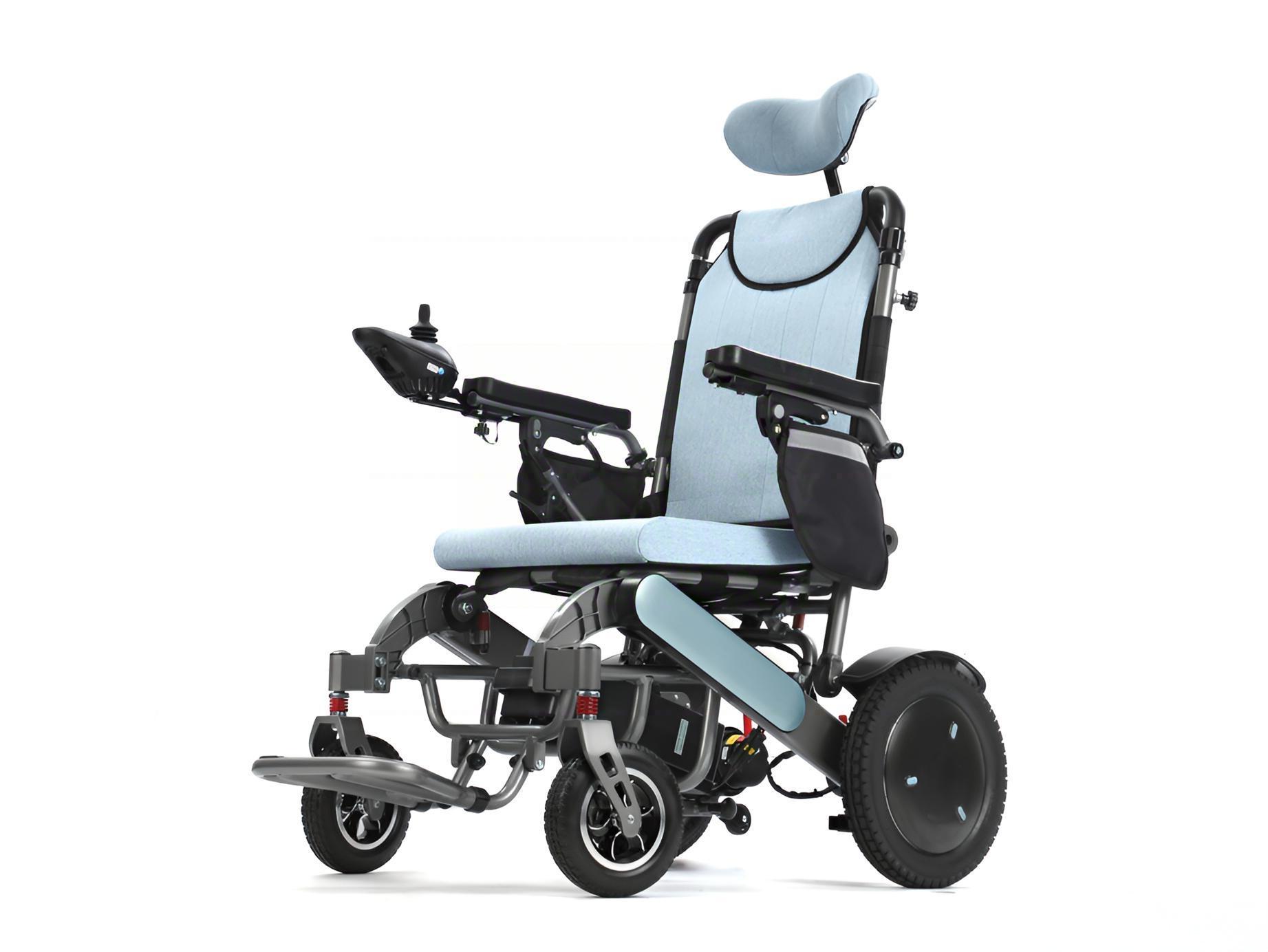
One smooth fold can be luck. Complete several calm open-close cycles according to the sample plan and compare the sound, latch feel, clearance and alignment. If the quality plan allows movement marks on selected fasteners, use them. A note made during the cycle is more reliable than a memory written at the end of the meeting.
This repetition is not a formal durability test. Its narrower purpose is to expose assembly variation, cable routing, friction and confusing operation. Durability claims still require controlled evidence under the relevant method.
For a bulk order, turn the useful observations into a procedure that can actually be repeated. State the sampling point, the positions to photograph, the locks to confirm and the record to retain. An inspection that takes so long nobody follows it is not a strong control.
Let the cables travel through the full movement
Follow the controller and battery cables from open to folded and back again. Look for tight bends, rubbing, pinching, pulled connectors or contact with an edge. Protective sleeves and clips should stay where the approved sample places them.
The controller mount deserves its own view. It should not strike the frame or packing. If the joystick is moved for shipping, the dealer instruction must show how it returns and where the cable sits. The first retail setup is a poor time to discover that two cable routes look possible.
After the visual and locking checks pass, make a low-speed drive in a clear area. Power on, move forward, reverse, turn and stop. Listen for rubbing and watch the casters. Return any freewheel control to drive mode before the chair is released.
Folding should not leave the frame twisted or a wheel touching. A chair that drives differently after the cycle has given the team a reason to stop. Manual realignment is not a normal setup step unless the approved design and instruction explicitly make it one.
Make the carton protect the mechanism
Pack the exact chair and accessory set in the approved shipping position. Look at the space around hinges, latches, joystick and cables. An insert should not press a latch toward release, load the controller mount or allow a loose accessory to enter the folding structure.
Unpack and repeat the mechanism check after the agreed handling review. A carton borrowed from a neighbouring model can place pressure in a different location. Packaging approval belongs to the same model identity as the folding record.
Service intake can begin with the model label, a safe unloaded video and one simple question: did the issue appear after transport, impact, folding or a component change? Structural disassembly stays with trained, authorised technicians. The Baichen service page provides a starting point for model-specific product support.
FAQ: Frequently asked questions
How many folding cycles should a sample complete?
The purpose of the check decides the number. Practical repeated cycles screen operation; durability claims require a controlled test plan and applicable evidence.
Is any hinge movement a defect?
Not necessarily. Acceptable movement depends on the approved design and inspection criteria. A receiving team should not invent a tolerance beside the carton.
Can lubricant solve a stiff fold?
Use only the maintenance method and product specified for the model. Stiffness may come from alignment, damage or contamination that lubricant could hide.
Should every unit in a bulk order be folded during inspection?
Follow the agreed inspection level and production control plan. Define the sampling rule before inspection begins, then separate any chair with an identity, locking or movement concern.
How Baichen can help
Send the exact model, approved sample revision, full open-close video and the point your team is questioning through the Baichen contact page. We can keep the review attached to the current configuration and instruction.
A consistent aluminum electric wheelchair folding mechanism inspection turns portability from a pleasant demonstration into a repeatable product experience. Keep the aluminum electric wheelchair folding mechanism inspection record with the sample file, and repeat the aluminum electric wheelchair folding mechanism inspection whenever an approved change affects the frame, latch, cable route or packing.
Post time: Nov-21-2026