
The cloth can wait. That is the first thing we want an owner to know after finding a new mark on a carbon wheelchair. With the chair still there, copy its model label; doing it later is how one digit gets lost. Memory comes next, and memory is rarely neat. It may have rained; a doorway may have caught the frame; a suitcase may have shifted beside it in the car. For us, carbon fiber electric wheelchair maintenance begins with the model, what happened, and what changed. The name of the fault can wait.
Keep the first pictures honest
Take two photographs before touching the mark. In the first, leave enough of the wheelchair in view to show the location. Move close for the second. A window usually gives enough light; this is evidence for service, not a catalogue shoot. Save the pictures with the model label and turn the power off.
Then look past the mark. Slow down at the fold and wherever a fitting meets carbon. Run your eyes along the surface. A pale line or lifted edge may appear; fibre may be visible; the contour may simply look wrong. Write that down. Do the same for a latch whose sound or resting place has changed.
A metal tube might bend and make the problem obvious. Carbon may keep its straight outline. For now, the toolbox remains exactly where it is. Sanding or filling the mark—and certainly drilling or painting it—would take information away from the person inspecting it. Possible impact calls for trained eyes. Park the chair as well when the surface looks quiet but the movement feels different.
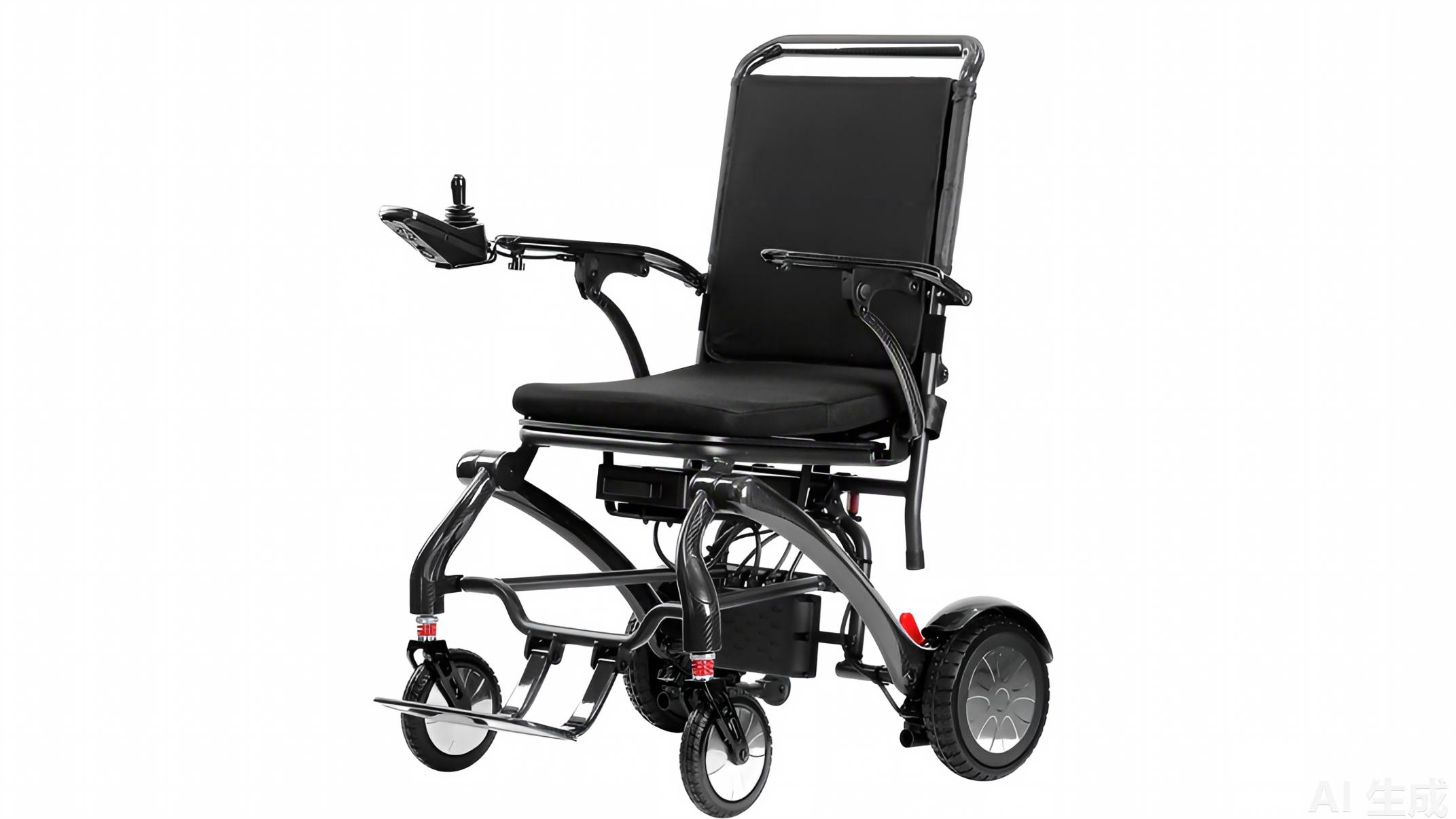
Carbon fiber electric wheelchair maintenance after rain
Keep the wet-weather check short:
● Soft cloth, room-temperature water, no dripping.
● Plain water first; cleaner only when the model instructions allow it.
● Dry frame, dry space beneath the seat, almost-dry cloth beside the controls.
● No spray, pressure jet, stiff brush, or harsh chemical.
● After sea air, an extra wipe over accessible fittings, wheels, and cables.
● Carbon frame without red steel rust; other parts still exposed to salt.
● Storage after the chair has dried.
The seat comes later because its labels may tell a different story. Perhaps the cover unzips while the sling below stays fixed; the cushion can have a method of its own. Use the Baichen carbon fibre power wheelchair range to find the family, then let the chair’s own label lead you to the right instructions.
After the chair has travelled folded
Luggage introduces the part of transport nobody sees. Unfold the chair in the usual way and stop at any new resistance. Force cannot explain what happened inside the fold.
Stay beside the fold for a minute. Is a cable sitting where it was not before? Does a plug lean rather than sit square? A fresh rub can reveal where a bag pressed. Note any new play in the joint and take a picture before moving the pieces around.
Two limits matter around the folding hardware:
● Fastener adjustment only when assigned to the owner; the stated torque is the stopping point.
● Lubricant only when both product and location appear in the manual.
● No spray on tyres, brakes, motors, connectors, upholstery, or sealed assemblies.
The Baichen ultra-light carbon fiber electric wheelchair makes a useful point: “carbon wheelchair” is only the beginning of an identity. The fitted battery, controls, tyres, wheels, and fold complete it.
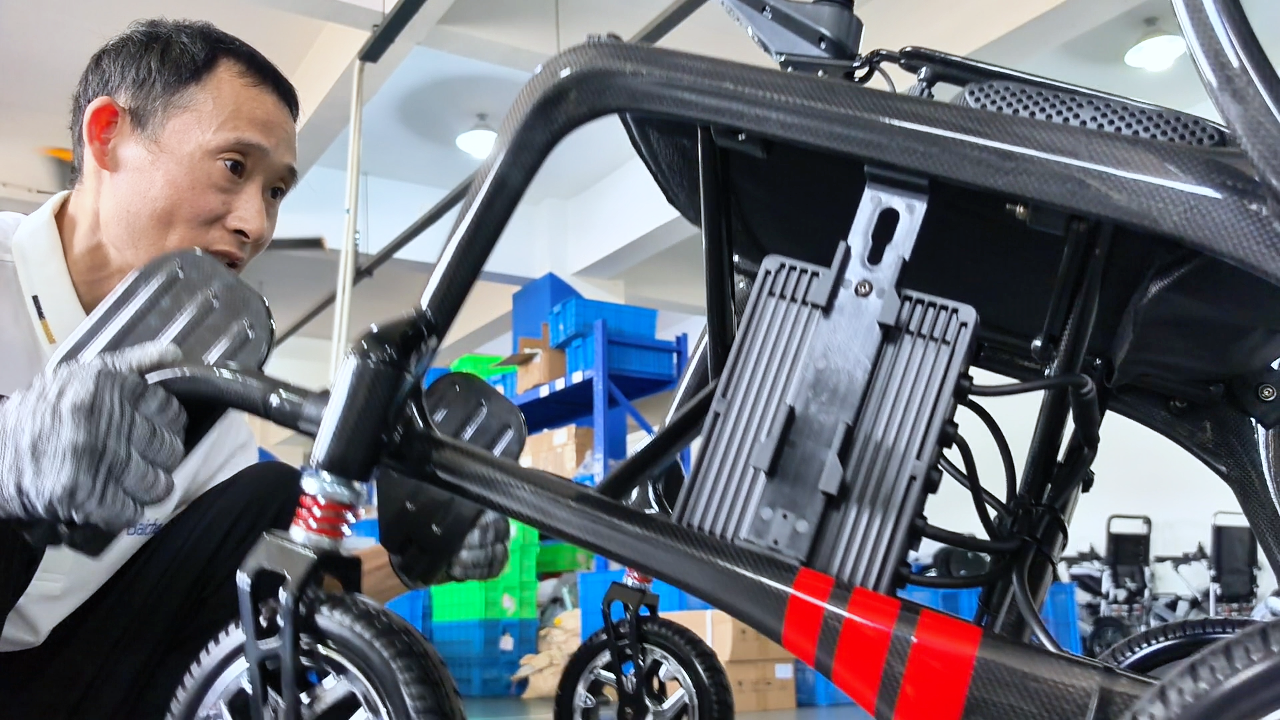
One quiet minute at the wheels
Use one slow revolution for each wheel:
● Reachable hair removed; protected covers left closed.
● Solid tyre checked at tread and rim.
● Pneumatic pressure taken from its own marking or model instructions.
● Uneven wear recorded by wheel position, with changes in steering, vibration, or rolling resistance.
The battery’s place in carbon fiber electric wheelchair maintenance
Before power is connected:
● Charger label matched to the chair and battery, not merely a fitting plug.
● Cable, plug, socket, and battery case viewed together.
● Split, swelling, moisture, impact mark, warmth, or unfamiliar smell treated as a stop sign.
● Damaged or doubtful pack kept closed and referred to trained support.
● Normal pack charged only where and how its model instructions state.
Rules copied from another battery chemistry become particularly risky during long storage. Stay with the guidance supplied for this pack. If it is meant to come out, the manual shows both the release and the surfaces made for holding. The cable has no role as a handle.
Leave the short drive until last
A short drive forms part of carbon fiber electric wheelchair maintenance only after a normal visual check and permission in the manual:
● Freewheel controls fully in drive.
● Empty, level area and very low speed.
● Stop for new drift, braking change, display message, sound, vibration, or smell.
● Power off, event recorded, no second lap.
A useful service note is not complicated
Put the model at the top of a message to Baichen service support. Under it, describe the last normal use, then the event, then the change. This need not sound technical. Copy the display exactly and attach photographs when taking them is safe.
“The chair is broken” offers almost no path forward. “The latch became stiff after the folded chair travelled beneath two suitcases, and it has not been powered since” gives service a timeline without pretending to diagnose the fault. Clear records are part of carbon fiber electric wheelchair maintenance because they keep guesses out of the next decision.
Carbon fiber electric wheelchair maintenance at handover
For distributors, a generic sheet quickly loses its owner. Keep a page with each model, headed by product and serial identity. Beneath that, pair the battery with its charger and note the tyre, fold sequence, lifting points, owner checks, storage, and route to service.
Complete one fold and unfold with the customer beside the chair. That is how normal resistance becomes familiar. Point to the label and freewheel controls on the product itself. End with the reasons to leave the chair parked: possible frame or battery damage, changed steering or braking, an electrical warning, or movement that has just appeared.
The exact manual and local rules set the planned service. A knock, soaking, or salty day ignores that calendar. Record it when it occurs.
One chair, one useful record
Good carbon fiber electric wheelchair maintenance stays with one model and its fitted configuration. Market, working environment, and recent history belong beside it. Send that short record and the photographs through the Baichen contact page. Baichen can use the details to find the relevant product information and build the next maintenance or handover step around that wheelchair.
Post time: Oct-12-2026