
The camera is usually one minute late
Too late. The top insert is already leaning against a bin, the chair is halfway out, and a mark near the frame junction has finally caught somebody’s eye. Everyone turns toward the carton. It can no longer show exactly how the chair was sitting.
We want the phone camera there before the knife. A carbon fiber electric wheelchair receiving inspection is simply the arrival story of one named chair, kept in the right order. It is not a courtroom for dents. Tomorrow’s colleague should be able to open the folder and follow the morning without asking everyone to reenact it.
Baichen’s carbon fibre power wheelchair category is a category, not one interchangeable chair. The warehouse record therefore borrows the exact identity from the order: model, configuration and shipment. Material language never replaces that identity.
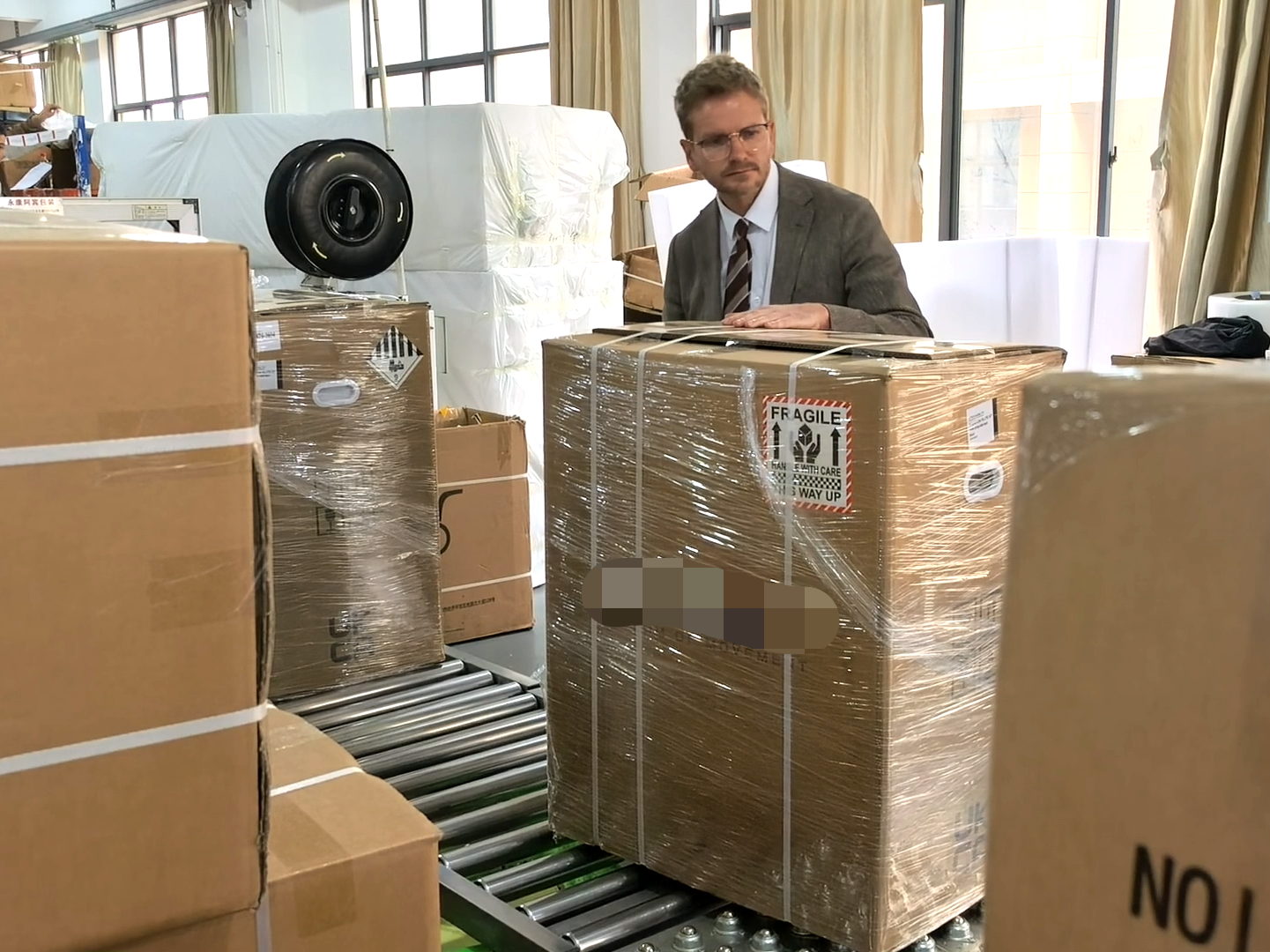
Six carton sides, one label and no performance
Take one lap around the closed carton. Nothing in this set is headed for a gallery. Start at the label, walk all six faces, step back for the whole package, then come close wherever the board folded, tore or lost its stiffness.
When a corner looks bruised, the first photograph comes from a step away. Now the close view has an address. Add a simple scale if size matters. For wording on the delivery record, the receiver uses the carrier procedure and transport arrangement already agreed. Contract improvisation can wait somewhere other than the dock.
Let the light walk across the frame
Move a soft lamp as if you were reading the frame from left to right. Harsh glare is unreliable company. Then lower your eye until the surface runs away from you; a ripple sometimes appears only from that unflattering angle.
Long tubes win the easy photographs. Our slower view belongs where things meet: insert and carbon, fastener and mount, fold and cable, seat support and frame. Caster, motor, control bracket and fitted anti-tip hardware each get their turn. A struck carton corner provides the starting address for following the pack inward.
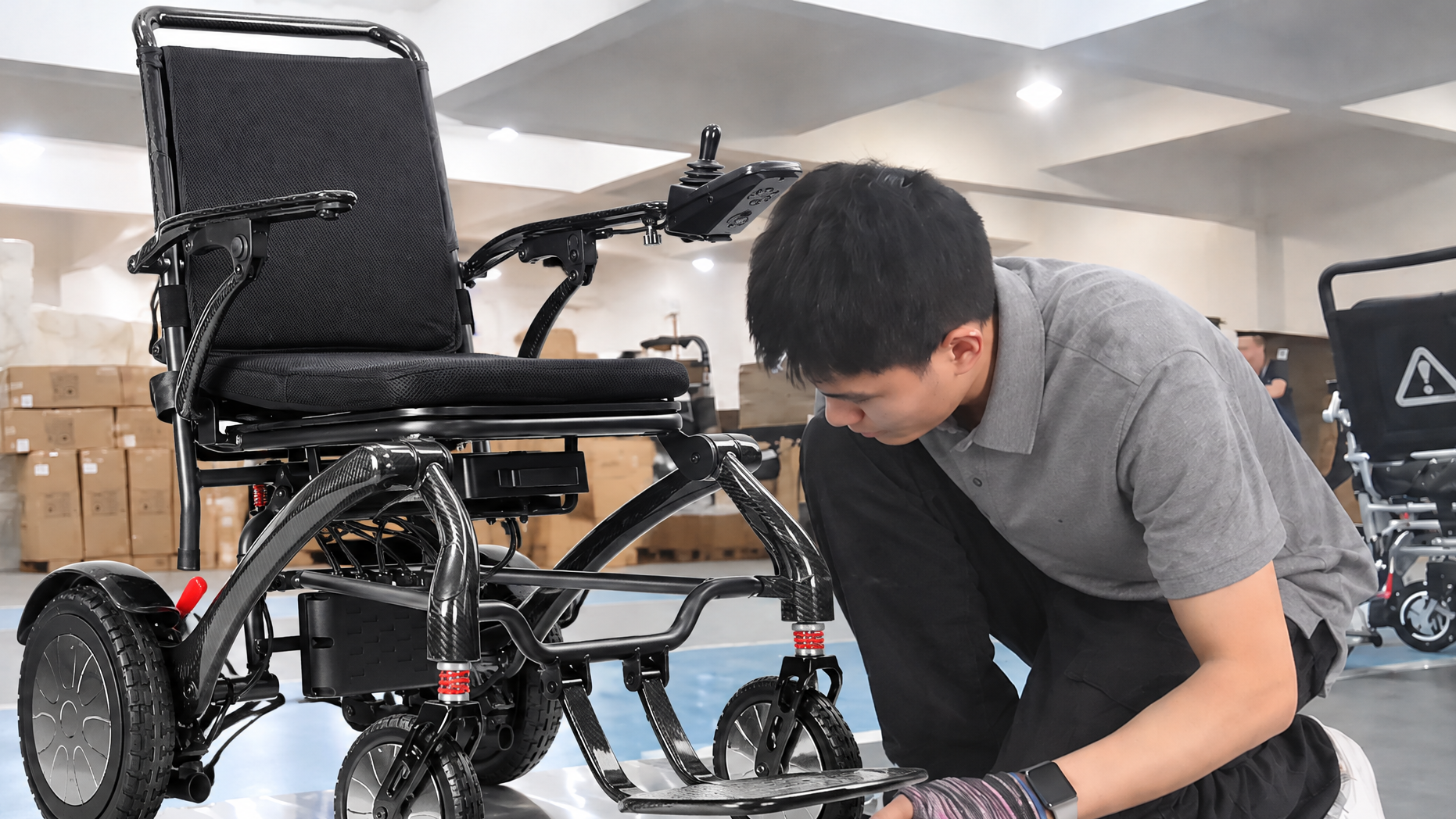
Put left and right into the same photograph
We roll the empty chair onto a level floor and squeeze left and right into one frame. First the camera faces it; then the camera walks behind. Wheels, casters, footrests and armrests now have their opposite numbers close enough for the eye to compare without memory.
The warehouse has borrowed no engineer’s title. It noticed a difference and saved the view. That is useful even before anyone decides whether one side is wrong.
The manual opens before the frame folds. When a latch resists, strength is not the missing instruction. Stop, read the cable route, and photograph rubbing or displaced trim. After reopening, let the chair stand exactly as the proper sequence leaves it. Carbon fiber electric wheelchair receiving inspection wants the real result, not a warehouse repair arranged for a better picture.
Introduce battery, charger and controller to one another
Before the charger comes near, the battery label meets the product record. Turn the casing gently into the light; include mount and connector. Crack, swelling, moisture or impact makes the applicable hold route more interesting than curiosity. “Just once” would create a new event and possibly a new risk.
Next we place charger and battery labels in the same conversation. The destination arrangement must belong there too. A finger then follows the joystick cable without tugging it. Transport pressure may have leaned on a bracket while leaving the plastic shell looking innocent.
Only after identity and visual questions close do we clear a little floor. No rider joins. Power on, watch the display, release the joystick and let the chair crawl rather than perform. A few metres cover forward, reverse, a turn and a stop. Put drive or freewheel back where the instruction expects it. A new click, rub or creak ends the outing; noise does not earn extra laps.
FAQ: Frequently asked questions
What happens when a surface scratch appears?
Not while its meaning is uncertain. Keep the location untouched and send the model identity with wide and close images for model-specific guidance. A quick cosmetic improvement can close the evidence before the technical question closes.
Must the warehouse open every carton?
The order’s inspection level and local procedure answer first. A carton with damage or an identity question leaves the ordinary flow. For the rest, a sampling rule written before the truck is far easier to defend than one invented after opening the first surprise.
Can a normal drive check release the chair?
Movement answers only the movement question. It cannot approve an unresolved mark, battery concern, packing discrepancy or frame junction. The whole receiving record has to reach its release point.
When can packaging leave?
After the unit’s status and any transport responsibility are clear, following the carrier, insurer, contract and local record rules. Packaging is unexciting until the exact insert or crushed corner becomes the missing witness.
How Baichen can help
Send the exact model, shipment reference, label view and photographs in arrival order. Baichen can keep product information attached to that configuration while local and technical roles decide within their scope. The Baichen service page opens the support conversation. Return to the carbon wheelchair category when the product direction needs checking, or bring the case through the Baichen contact page. We treat carbon fiber electric wheelchair receiving inspection as work shared by two unseen people: one opening the carton today and another relying on the chair later.
Post time: Nov-19-2026