
“It is eighteen inches,” the note said. Our sample chair sat beside it, offering no help whatsoever. “Which eighteen?” became the day’s unexpectedly good question. One person had measured the sitting space; another had heard the number and pictured the doorway. Both were careful. The label was careless. We keep that scrap of paper near the measuring tape.
That misunderstanding is the reason our electric wheelchair seat width guide refuses to carry a number without a name. “Seat” belongs beside the usable sitting space. “Overall” travels with the complete chair into conversations about doors, corridors and rooms. Fit and access eventually shake hands, but swapping their measurements is rather like swapping an address and a shoe size.
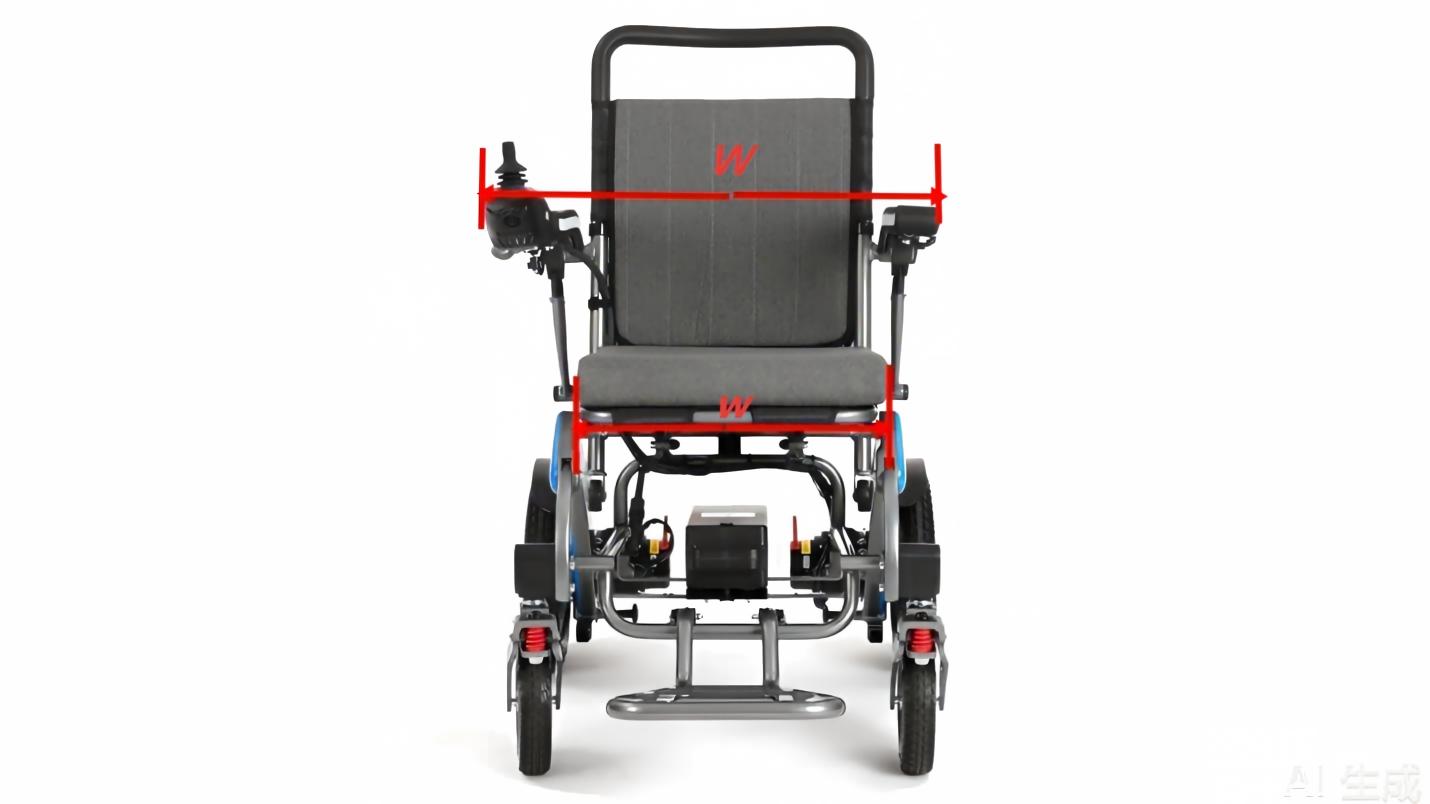
Put two labelled boxes on the form
On the dealer sheet, two oversized boxes sit too far apart to be mistaken for twins. One says SEAT WIDTH; the other, OVERALL WIDTH. Each has its unit already printed. Beside them is a slightly fussy question: “Where did this figure come from?” We tick person, doorway or current model sheet. It feels pedantic until a naked “18” tries to run the order again.
Width never arrives alone. Depth turns up with it, followed by the cushion, back, armrests, feet and the hand trying to reach the controller. “Wider must be nicer” sounds reasonable over the telephone and can be entirely wrong in the chair. A snug chair can make its complaint obvious; excess space is quieter while useful support slips away. When pain, pressure, skin, posture, asymmetry or a difficult transfer walks into the appointment, we close the catalogue. The next voice belongs to an appropriately qualified seating professional.
A salesperson may know the electric wheelchair seat width guide backwards and still not be a clinician. What should remain after the reading? A steadier tape measure. Notes that describe the sight in front of us, not the conclusion we hoped to reach. And enough confidence to pull out a chair for the properly qualified colleague.
Measure the person on an ordinary day
A good measurement rarely starts with “stand over there.” We wait through the small, familiar fidget—the shoulders dropping, feet finding their place—until sitting looks ordinary again. Coat or clothing, intended cushion, date and the colleague holding the tape all go into the margin. A photograph cannot substitute for this step, and body weight cannot predict it. Two people who share a weight may sit very differently.
During a trial, we look without pretending to diagnose. Is there obvious side contact? A large gap? Does the hand reach the joystick without the shoulder chasing it? Are feet supported, transfers workable and posture stable enough for the planned use? An uncomfortable observation is allowed to remain an observation. Squeezing it into the nearest stock size merely moves the difficulty to delivery day.
For a first look, dealers may move between aluminum electric wheelchairs, carbon fibre power wheelchairs and the other formats in the range. That is browsing, not approval. Once a model reaches the short list, its current specification and chosen configuration take over the conversation. Yesterday’s attractive photograph is excused from answering for today’s chair.
The tape measure leaves the showroom desk
Ask a family for “the difficult door” and they may point to the widest one. The real troublemaker can be a smaller opening half remembered behind a handle, hinge, skirting board or cabinet. Tape goes across the clear gap—not the architectural promise—and then walks backwards with us. Straight passage is only half a test when the short hall before it refuses the turn.
The sketch begins at overnight parking and follows breakfast rather than alphabetical order. A corridor may come before the lift; bathroom, bedside, table and vehicle wait later on the pencil line. We draw the corners badly and write beside the thresholds. Nobody frames this map. It wins its argument by remembering sequence, something a neat list tends to forget.
Halfway through the electric wheelchair seat width guide, two pages that began separately are laid side by side: the person and the building. Ignore either one and the answer becomes comic—the chair without its rider, or the rider waiting outside the door. Verified overall width now sits beside the real opening while the people involved discuss usable control room in that setting. A universal subtraction would be wonderfully convenient and wonderfully dishonest about different homes, users and chairs.
Make the electric wheelchair seat width guide impossible to misread
Each candidate gets what we jokingly call its passport page. Open it and the dimensions arrive in pairs: seat width with depth, operating width with length, and folded size where folding applies. Product-weight wording and specified load have their own lines; fitted cushion, arms, feet and controller have another. A tiny sketch shows two tape ends arguing over the correct points. Metric and imperial figures are reconciled before the telephone rings, while nobody is waiting through our arithmetic.
One buyer may begin with the magnesium power wheelchair range; another may find the useful starting point among steel electric wheelchairs. Those are different briefs, not shortcuts around model confirmation. “Same family” helps a browser and misleads a tape measure.
The sample gets its own little confession: what is fitted today? Swap a cushion, armrest or joystick mount and even a familiar chair may answer differently. While the sample is still in front of us, a finger visits each item as “standard” or “optional”; the order sheet repeats the distinction. Weeks later, a polished online photograph may win the memory contest, but it cannot edit that record.
Let the trial include the awkward corner
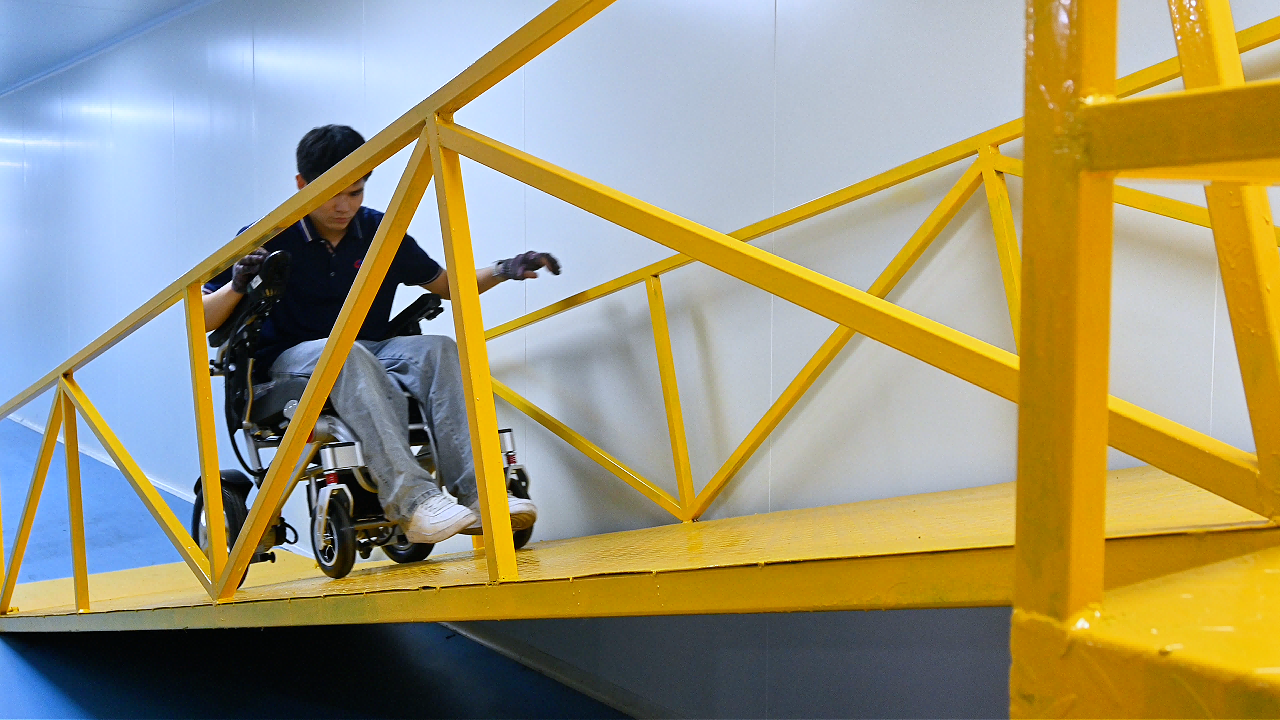
A straight showroom aisle is kind to every chair. We add a doorway, a marked turn, a table approach and the controller reach that daily use may demand. The customer drives at a comfortable pace; if a caregiver will fold, push in freewheel mode or load the chair, that person joins the relevant part. No one wins points for rushing.
The electric wheelchair seat width guide travels with the trial notes. We write what worked, where hesitation appeared and which question remains open. If the route cannot be reproduced in the showroom, the missing condition stays visible on the pre-delivery record. “Should be fine” is retired from the handover vocabulary.
Before order approval, another colleague reads four items back: person or referral outcome, narrowest route, exact chair and configuration, and any condition still to be checked. This second voice catches a surprising number of swapped units, copied dimensions and assumptions that sounded firmer in the first conversation.
Let returns improve the next conversation
“Too wide” is not a useful return category until we ask: the seat, the whole chair, the turn, the vehicle or the chosen options? Customer service uses the same terms as sales and attaches the exact model identity. Now the case has somewhere to go besides the nearest innocent-looking number.
Buying a chair should not require handing over a biography. We keep the record deliberately lean and handle it under the applicable local privacy rules. Product identity, route measurements, the trial note and any referral outcome usually keep the operational thread unbroken. Baichen’s service support gives dealers a route for product questions; a precise record makes that route shorter.
Review several cases together. If three customers confuse seat and overall width, the electric wheelchair seat width guide needs a diagram, not three longer apologies. If one corridor turn causes repeated surprises, add it to the trial floor. The return has already cost time; it should at least purchase a better process.
Questions dealers hear
Is seat width the same as total chair width?
No. Seat width describes usable sitting space. Overall width describes the complete chair at its widest operating point and belongs in the access check. Label both numbers and keep their units visible.
Will a wider seat cure discomfort?
Sometimes width is innocent. We let depth, cushion, back, feet, controls and the transfer method each defend themselves before changing it. Posture, pressure or pain moves the conversation to qualified assessment; the showroom tape has reached the end of its authority.
Can we use one allowance formula?
One neat allowance looks attractive on a laminated card, then clothing, cushion, posture, chair design, control skill and the room itself refuse to behave neatly. We keep the agreed measuring method and exact model data, plus a clearly marked door to professional referral.
Bring the tape-measure questions to Baichen
Tell us the market, intended chair categories and the measurements dealers find hardest to explain. We can help organise model information and an electric wheelchair seat width guide for a clearer showroom conversation. Review the relevant ranges, then send the real access and configuration questions through the Baichen contact page.
Post time: Oct-12-2026