
The next user should not inherit the previous shift’s uncertainty
A shared chair can return to storage looking almost unchanged. The charger may belong to the unit beside it. One footrest may have loosened. A small coating chip may still be wet from cleaning. None of these details is dramatic, which is exactly why they can be missed.
Steel electric wheelchair fleet maintenance gives each detail a place to be noticed and handed over. The daily check should be quick enough for staff to complete, while scheduled reviews and repairs remain with people who have the right training, tools and model information.
Baichen’s steel electric wheelchair category includes different formats. A fleet form can share a common layout, but it must not pretend that every chair uses the same battery, charger, folding system or service part.
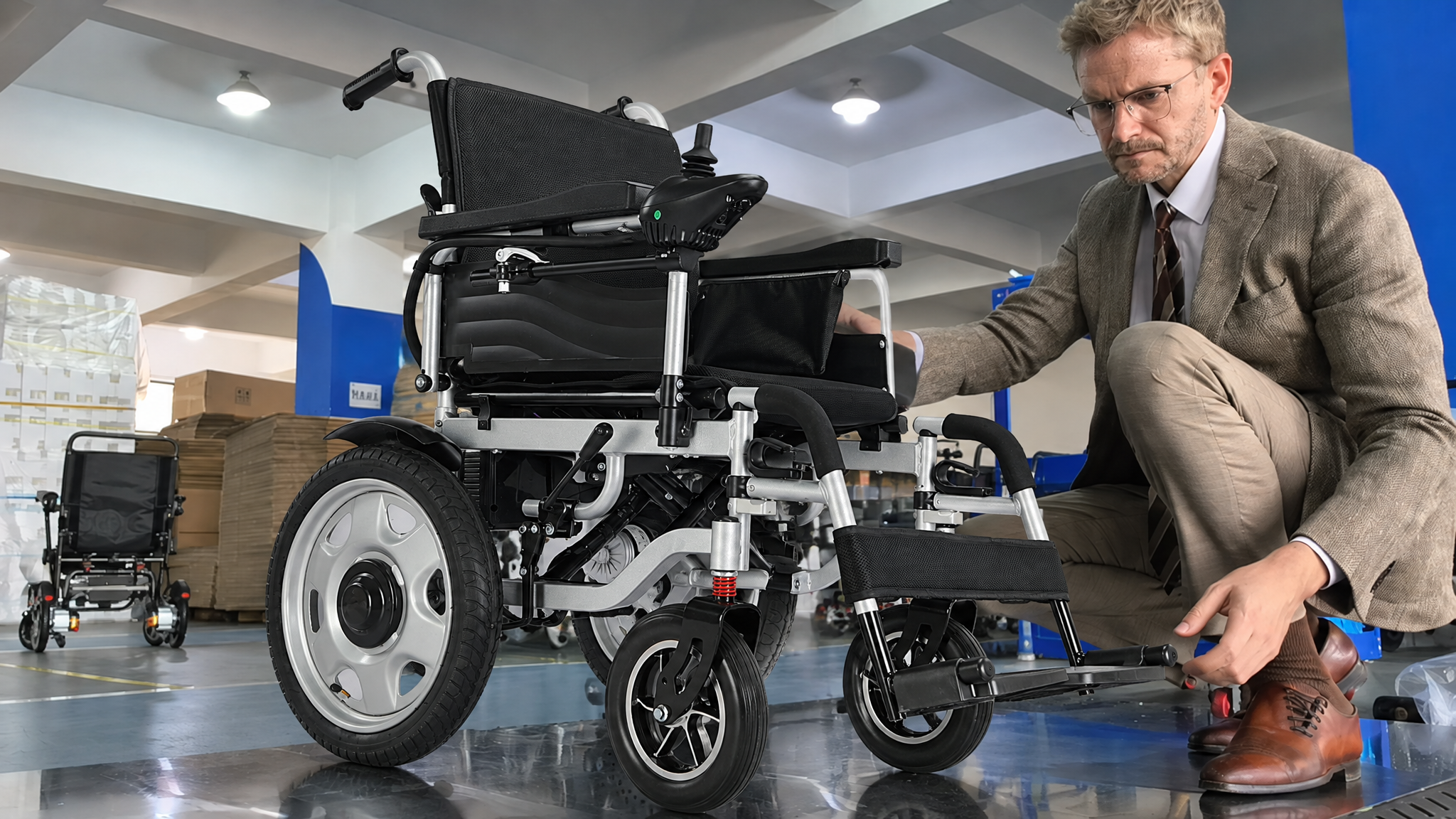
Give the chair a name before it joins the fleet
An asset number is the beginning. Connect it to the factory model, serial or batch reference, battery, charger, controller, location and responsible service contact. Photograph the product label and the complete chair when it enters service.
This record prevents a familiar problem in mixed fleets: a part looks right and gradually becomes the right part in everyone’s memory. Chargers, batteries and controllers should remain tied to verified compatibility, not casing shape.
Keep the handover check short enough to happen
Before issue or rental release, walk around the chair once. Look at the frame, seat, armrests, footrests, wheels, anti-tip parts, joystick, visible cables and battery area. A loose item, sharp edge, exposed wire, damaged cover or missing accessory should not be left for the next person to discover.
Use a clear, level area for the basic function check. Power on, move slowly forward and back, make a turn and stop. Confirm that any freewheel control has returned to drive. New noise, vibration, pulling or delayed response is a reason to hold the chair for review, not to add a longer test.
A good steel electric wheelchair fleet maintenance routine is often quiet. The chair passes, the form closes and service continues. The value becomes visible when a small change is caught before the unit is handed over again.
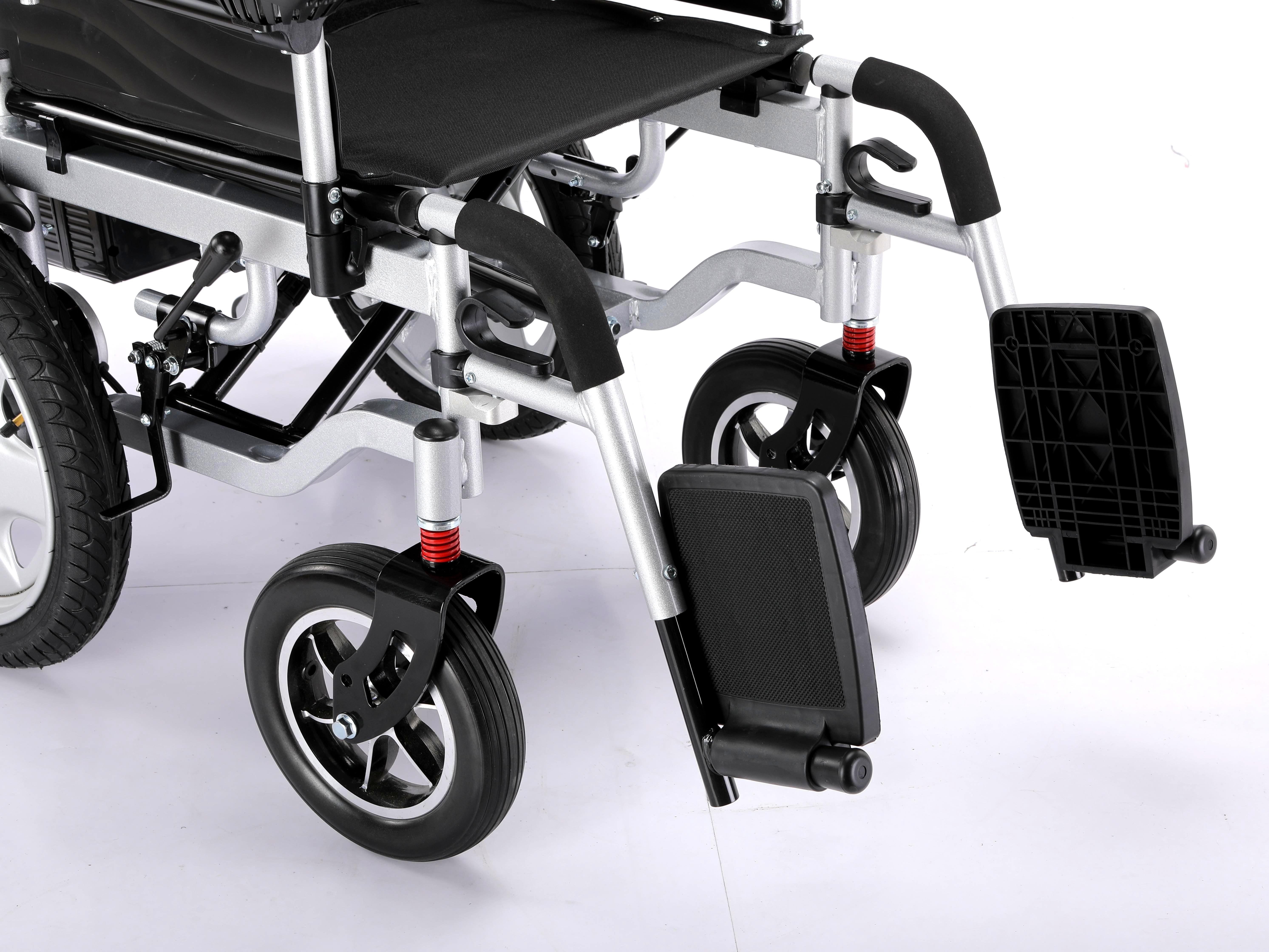
Read the coating as part of the frame story
Steel can support a robust frame design, but exposed metal deserves attention. Look around welds, joints, footrest mounts, motor supports, caster forks, seat rails, folding points and the areas that touch racks or vehicle restraints. Record chips, dents, deformation, cracks, staining and loose hardware.
Do not hide a question under paint. Clean and dry the area only as the current instruction allows, then let a qualified person decide what the location and depth mean. In wet, humid or coastal settings, damaged coating and moisture-holding joints may need closer observation.
Put the chair on a level surface and compare left with right. A wheel beginning to rub, a frame sitting unevenly or a chair tracking differently can point to an impact or loose component. The warehouse note does not need a structural conclusion; it needs a clear location and useful photographs.
Wheels collect the evidence of daily routes
Hair, thread and debris rarely appear in the product brochure, but they do find axles. Check the tyres, wheel attachment, caster swivel, forks and anti-tip wheels. Look for cracking, flat spots, uneven wear, wobble and rubbing.
Braking and freewheel checks follow the model-specific procedure. Do not improvise a slope test with a rider. The release check only confirms ordinary low-speed behaviour; formal brake or stability evaluation belongs in an appropriate service environment.
Repeated findings should be easy to see by asset. If the same wheel or brake concern appears again, the history may direct attention to a route, storage impact, loading practice or component. That pattern is one reason to keep steel electric wheelchair fleet maintenance records searchable rather than in a pile of paper forms.
Keep chargers from becoming anonymous
Label the charger and connect it to a verified model or compatibility list. Inspect the casing, cable, plug, connector and charging point. Damaged equipment leaves service; it does not stay on a shelf with a note that may fall off.
Charging and storage follow the current manual and battery type. A backup chair that sits for long periods may need a different routine from a unit used every day. Load, temperature, terrain, age and charging history also affect performance, so an advertised range is not a maintenance threshold.
When replacement is needed, start from the controlled battery code and confirm charger compatibility. Transport of a battery is a separate logistics question for the exact pack and arrangement. Guessing from a label colour is not enough.
Clean the chair without creating a new fault
Define approved cleaning materials and the areas that must stay dry. Do not direct spray into the joystick, connectors, motor or battery compartment. Cushions and covers should return to their correct positions, and the chair should be dry before storage or charging.
Care facilities and rental operators may also have local cleaning or infection-control rules. Align those rules with the product instruction. Avoid antimicrobial or disinfection claims unless evidence for the exact material and method supports them.
After cleaning, take another quick look. A moved cable, damp connector or incorrectly fitted cushion can turn a completed cleaning task into the next service call.
Schedule deeper work by use, environment and history
The calendar alone should not choose the inspection interval. Consider the current manual, fleet usage, environment, past incidents and local requirements. A heavily used rental unit and a reserve chair do not live the same working life.
A deeper review may cover fasteners, frame and weld areas, folding or reclining systems, electrical connectors, controller mount, motor and gearbox behaviour, wheels, battery, seating hardware and a controlled drive. Qualified checks should use the specified tools and settings.
Record what was measured, which part was changed, who completed the work and what happens next. Steel electric wheelchair fleet maintenance becomes useful to management when the history shows repeat faults, downtime and the point at which the chair returned to service.
The Baichen service page can support a model-specific product discussion. Local technicians should work within their authorised scope and applicable requirements.
Give unusual events their own route
A collision, drop, water exposure, electrical smell, overheating, uncontrolled movement or structural concern should remove the chair from normal issue. Preserve the circumstances, operating condition, staff or user report, photographs and immediate action.
A chair that restarts normally has answered only one question. The event may still have affected alignment, wheels, controls or battery systems. Qualified review decides the next step.
While the unit is held, the operator needs a mobility plan. A substitute chair, named escalation contact and complete service intake reduce uncertainty for the person waiting. Track the time from incident to diagnosis, part arrival and release; downtime is part of fleet performance too.
FAQ: Frequently asked questions
May staff tighten a loose bolt during the daily check?
Only when the current procedure authorises it and the staff member is trained with the specified tools and settings. Otherwise hold the chair for a technician. Too much torque can cause another problem.
Is a small rust mark only cosmetic?
Do not decide from size alone. Record its exact location and obtain the approved assessment. Repair depends on depth, surrounding frame condition and model guidance.
Should one charger stay with one chair?
Dedicated identification reduces mix-ups. If chargers are shared, use a verified compatibility list and clear labels that remain with the equipment.
What belongs in a service intake message?
Start with the asset and model labels, current status, battery indication, charging history, visible damage, unusual sound, recent event and steps already tried.
How Baichen can help
Send the model, asset history, label photograph, symptoms and clear images through the Baichen contact page. We can keep the product discussion attached to the correct configuration and help the service team identify the information it still needs.
A practical steel electric wheelchair fleet maintenance system keeps every chair identifiable and every decision traceable. Review the steel electric wheelchair fleet maintenance record after a repeated fault, incident, configuration change or service-process update. The result is not merely a tidier file; it is a clearer handover to the next person who depends on the chair.
Post time: Nov-22-2026